
 EN
EN
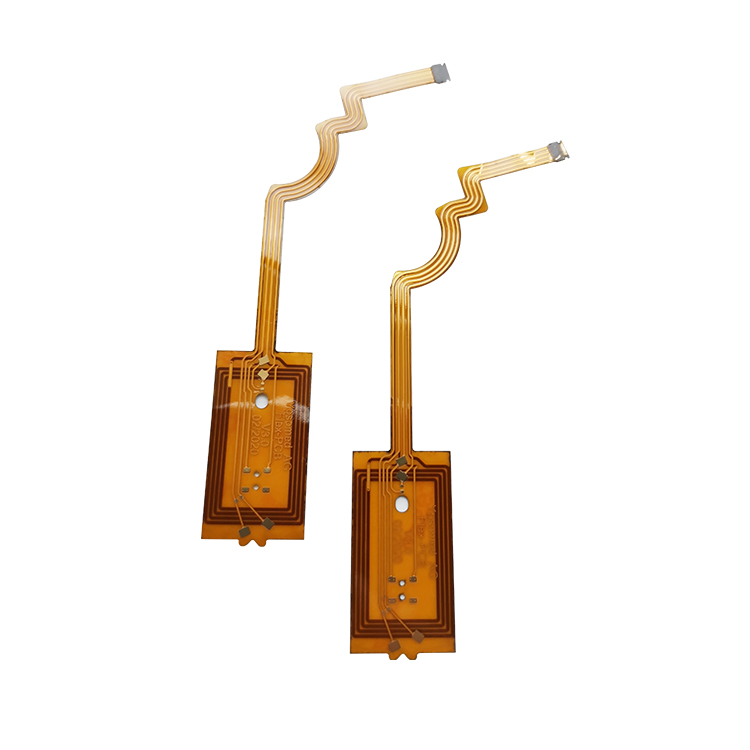
Reduction of Failure Points Through Integrated Rigid Flex PCB Assembly
Elimination of Solder Joints and Connectors in Integrated Interconnects
Rigid flex PCB assembly merges rigid boards with flexible circuits into a single, unified structure—eliminating discrete solder joints and mechanical connectors that traditionally link separate modules. Instead of ribbon cables or plug-in connectors, the flexible layer routes signals directly between rigid sections. Fewer solder points reduce locations vulnerable to cold joints, cracking, or thermal fatigue; removing connectors also eliminates risks of corrosion, misalignment, and loose fits during assembly or operation. This integration is especially advantageous in space-constrained devices, where every eliminated connector frees board area and minimizes signal loss from impedance discontinuities. The result is a mechanically cohesive interconnect that maintains electrical integrity under thermal cycling and mechanical stress—while simplifying manufacturing by reducing manual soldering and component handling.
Lower Failure Rates from Fewer Interconnects and Eliminated Wiring Harnesses
Replacing multiple rigid boards and custom-wired harnesses with a single rigid flex assembly cuts failure probability at the system level. Each connector or crimped wire junction introduces a mechanical weak point susceptible to vibration-induced loosening, contact wear, or fatigue—failures accelerated in automotive, industrial, and aerospace applications. By embedding interconnects as flexible traces within the laminate, rigid flex designs remove dozens of potential break points. Reliability engineering principles confirm that interconnection count correlates exponentially with system failure likelihood; reducing them directly improves mean time between failures (MTBF). Unlike field-installed harnesses—prone to crimp errors or routing inconsistencies—the rigid flex interconnect is factory-validated and immune to incorrect assembly. This simplification lowers lifecycle costs through reduced inventory, inspection, and repair complexity—and delivers weight and volume savings critical for portable and avionics systems. Crucially, the flexible circuit sustains repeated bending without wire fatigue, ensuring consistent performance across the product’s operational life.
Superior Mechanical Robustness in Demanding Environments
Vibration, Shock, and Drop-Test Performance of Rigid Flex PCB Assembly
Rigid flex PCB assembly demonstrates exceptional resilience in high-stress mechanical environments due to its monolithic construction. The integrated flexible layer absorbs impact energy during drop tests—acting as a distributed shock absorber rather than transmitting force to brittle solder joints. In vibration testing, the absence of wiring harnesses eliminates rubbing, fretting, and resonance amplification caused by dangling cables or bracketed components. Military-grade qualification standards—including MIL-STD-810H shock testing—confirm functional survival under high-G events (>1,500 G), while long-term endurance studies show no solder joint cracking after 10 million vibration cycles. Mounting is simplified with fewer fasteners and brackets, further reducing loosening points. High-frequency vibration damping occurs naturally in the flexible polyimide substrate, mitigating micro-crack formation in plated-through holes and surface-mount terminations.
Thermal Cycling Resistance via CTE Matching and Adhesiveless Lamination
Thermal reliability hinges on minimizing strain at material interfaces during temperature swings. Rigid flex PCB assembly achieves this through intentional coefficient of thermal expansion (CTE) matching between rigid FR-4 or high-Tg laminates and flexible polyimide layers—reducing interfacial stress during repeated cycling. Designers use thermal simulation tools early in layout to validate material pairings and stackup geometry. Adhesiveless lamination—using cast polyimide instead of adhesive-bonded films—enhances stability by eliminating an aging-prone organic layer prone to outgassing, moisture absorption, and delamination. These assemblies reliably endure thousands of thermal cycles from –65 °C to +150 °C, complying with IPC-6013 Class 3 requirements for high-reliability flex circuits. This capability ensures sustained electrical continuity and mechanical integrity in extreme environments such as avionics, downhole drilling electronics, and engine-control modules.
Design-for-Reliability: Critical Layout Practices for Rigid Flex PCB Assembly
Optimizing Bend Radius, Transition Zones, and Copper Balance
Long-term reliability begins with disciplined layout. A minimum bend radius of 10× the total flex layer thickness prevents conductor fracture and coverlay cracking during dynamic flexing. Transition zones—where rigid and flex sections meet—require gradual copper tapering, staggered via placement, and strategic removal of stiffeners or stiffener cutouts to avoid abrupt stiffness changes. Copper balance across the flex region is essential: asymmetric copper distribution induces warpage during lamination and thermal cycling, increasing risk of trace cracking or delamination. Vias must be placed outside active bend areas and reinforced with teardrops or annular rings where needed. When applied consistently, these practices suppress fatigue-driven failures and support reliable operation in applications requiring repeated motion—such as medical robotics, foldable displays, and deployable satellite systems.
Material Selection and Its Direct Impact on Long-Term Reliability
Polyimide vs. LCP: Thermal-Mechanical Stability in Rigid Flex PCB Assembly
Material choice profoundly influences lifetime performance. Polyimide remains the industry standard for rigid flex PCB assembly due to its high glass transition temperature (>360 °C), excellent thermal stability, and proven resistance to delamination under thermal stress. Liquid crystal polymer (LCP), while less common, offers tighter dimensional control, lower moisture absorption (<0.04%), and a CTE closer to copper—reducing via barrel stress in fine-pitch, high-frequency designs. LCP’s superior moisture resistance makes it ideal for hermetic or high-humidity applications, whereas polyimide’s broader process compatibility and higher thermal tolerance suit reflow-heavy, multi-layer rigid flex stacks. The optimal selection depends on application-specific priorities: thermal cycling severity, environmental exposure, signal integrity demands, and manufacturability constraints. Matching material behavior to operational conditions—not just datasheet specs—is foundational to maximizing reliability and minimizing field failure risk.
FAQ
What is rigid flex PCB assembly?
Rigid flex PCB assembly combines rigid circuit boards with flexible layers in a single structure, eliminating the need for mechanical connectors and solder joints between separate modules.
What are the benefits of minimizing solder joints in PCB assembly?
Minimizing solder joints reduces failure points such as cold joints, cracking, and thermal fatigue, improving long-term reliability and simplifying manufacturing processes.
Why is rigid flex PCB assembly ideal for space-constrained applications?
Rigid flex PCB assembly eliminates connectors, freeing up board space and reducing signal losses due to impedance discontinuities, making it suitable for compact devices.
How does material selection impact rigid flex PCB performance?
Material selection, such as the use of polyimide or liquid crystal polymer (LCP), affects thermal stability, moisture resistance, and durability, influencing the assembly's long-term reliability under specific conditions.