
 EN
EN
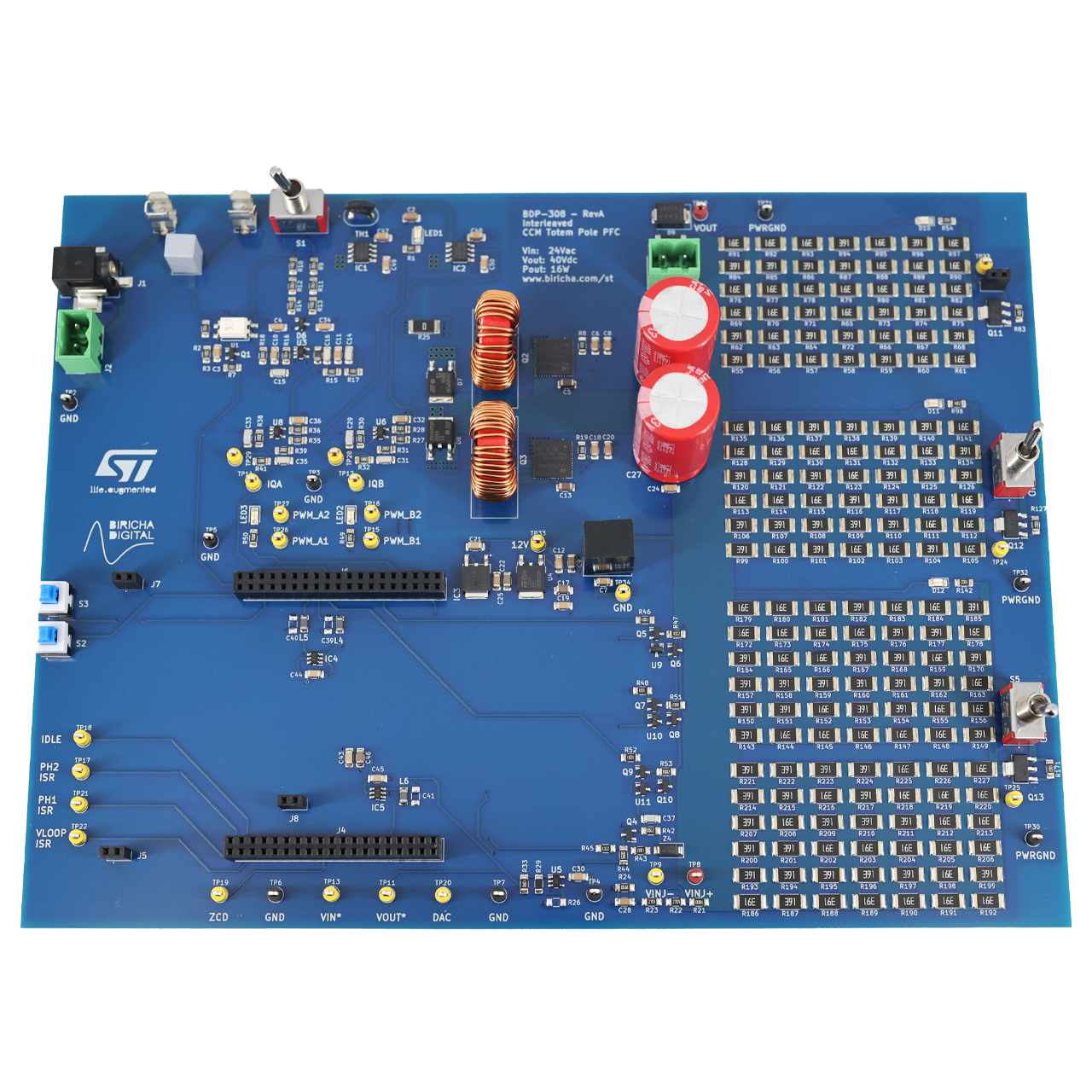
Industrial PCB Assembly: The Core Enabler of Automation System Reliability
How Component-Level Precision in Industrial PCB Assembly Prevents System-Level Failures
In automation systems, every component on a PCB must operate flawlessly for the entire machine to function reliably. Even a single misplaced resistor or misaligned capacitor can trigger cascading errors, causing unplanned downtime that costs thousands of dollars per hour. Industrial PCB assembly mitigates this risk through extreme placement accuracy—modern pick-and-place machines achieve positioning tolerances within ±25 µm, ensuring fine-pitch ball-grid array (BGA) packages align precisely with their pads. Solder paste application is equally critical: controlled stencil printing and optimized reflow profiles prevent opens, shorts, and voids—common root causes of intermittent field failures. By rigorously managing these micro-level variables, assembly providers eliminate failure points before they propagate, transforming discrete components into high-availability control boards.
Solder Joint Integrity and Trace Design as Determinants of Long-Term Operational Stability
Long-term stability hinges not just on initial precision, but on how well solder joints and copper traces endure thermal cycling, mechanical vibration, and aging. Industrial automation boards often undergo hundreds of daily temperature cycles between –40 °C and 125 °C—inducing differential expansion that stresses every interconnection. Poorly designed traces—too narrow or routed with sharp right-angle bends—are prone to cracking under repeated stress, risking signal degradation or open circuits. Industrial PCB assembly counters this with thicker copper layers (2 oz or more), wider power-path trace widths, and controlled-impedance routing for high-speed data lines. Solder joint integrity is further reinforced through fatigue-resistant alloys like SAC305 and thermally optimized reflow profiles that promote uniform intermetallic compound formation. These design and process decisions—executed at the assembly level—are what enable automation systems to operate reliably for years without field failures.
Meeting Harsh-Environment Demands Through Robust Industrial PCB Assembly
Thermal, Vibration, and Contamination Resilience Built into the Assembly Process
Industrial automation electronics face extreme conditions far beyond consumer-grade specifications. PCB assemblies must remain functional despite:
- Thermal extremes exceeding 125°C in metal processing equipment
- Constant vibration up to 15G in heavy machinery
- Dust contamination levels meeting ISO 14644 Class 8 standards
Robust countermeasures are embedded directly into the assembly process. Conformal coatings—validated to withstand 20,000 hours of salt spray testing—prevent moisture ingress and chemical corrosion. Thermally stable solder alloys maintain joint integrity across –40°C to +150°C operating ranges. Selective underfill applications reduce component displacement by 78% under vibration compared to standard assemblies, per IPC’s 2023 vibration study. This integrated approach transforms industrial PCB assembly from a commodity service into a mission-critical engineering discipline.
Signal Integrity Preservation in High-Density Automation Control Boards
As automation systems grow more interconnected, electromagnetic interference (EMI) protection becomes non-negotiable. High-frequency drives and motor controllers generate noise capable of disrupting adjacent control boards. Industrial PCB assembly addresses this through three coordinated techniques: controlled-impedance routing (±5% tolerance) for critical signal paths; 4-layer stackups with dedicated power and ground planes; and surface-mount RFI shields delivering up to 90 dB attenuation. Strategic via placement around high-speed circuits reduces crosstalk by 58%, while co-planar waveguide designs preserve waveform fidelity in CAN bus networks, as confirmed in the IEEE 2023 industrial communications study. Post-assembly validation includes eye diagram analysis at 1 Gbps+, power distribution network impedance checks, and differential pair length tuning to ±0.05 mm.
Quality Assurance Protocols That Define Excellence in Industrial PCB Assembly
Automated Optical Inspection (AOI) and X-Ray Testing for Hidden Defect Detection
Rigorous testing forms the backbone of reliable industrial PCB assembly. Automated Optical Inspection (AOI) uses high-resolution cameras to scan each board immediately after soldering, detecting misaligned components, insufficient solder volume, or bridging before progression to subsequent stages. While AOI excels at surface-level defects, X-ray inspection reveals hidden flaws beneath BGAs, quad flat packs (QFPs), and other bottom-terminated components—identifying voids, cracks, or cold solder joints that would otherwise cause latent field failures. Combining both methods significantly reduces rework rates and ensures every assembly meets stringent reliability thresholds.
IPC-A-610 and J-STD-001 Compliance as Non-Negotiable Benchmarks
Adherence to IPC-A-610 and J-STD-001 is foundational—not optional—for consistent, high-integrity industrial PCB assembly. IPC-A-610 defines visual acceptability criteria for electronic assemblies, covering solder joint geometry, component mounting, and cleanliness. J-STD-001 establishes requirements for materials, methods, and verification of soldered interconnections—including flux selection, cleaning processes, and thermal profiling. Together, these standards provide an auditable, globally recognized framework for zero-defect manufacturing. Providers certified to both demonstrate proven competence in workmanship, giving automation engineers confidence that each board will perform reliably under continuous, mission-critical operation.
Strategic Advantages of Partnering with Specialized Industrial PCB Assembly Providers
Specialized industrial PCB assembly partners deliver measurable operational advantages through domain-specific expertise and tightly controlled manufacturing frameworks. Their deep technical knowledge enriches early-stage design validation—proactively identifying and mitigating reliability risks such as trace routing vulnerabilities or unmanaged thermal zones before production begins. This results in an average 35% improvement in first-pass yield rates, per IndustryWeek’s 2022 benchmarking report. Proactive engagement extends to Design for Manufacturing (DFM) optimization, where sourcing strategies ensure genuine graded components and compatible coefficients of thermal expansion (CTE) between substrates and parts.
Manufacturing excellence stems from calibrated automation and strict process control. Specialized providers deploy solder paste printers achieving positional accuracy within ±0.05 mm—critical for ultra-fine-pitch components common in modern automation controllers. Their multi-stage quality assurance integrates AOI for solder joint anomalies, followed by electrical testing using boundary-scan protocols to validate functional integrity under simulated thermal and mechanical stressors. This layered verification methodology reduces field failure rates by up to 60% compared to generic assemblers—directly increasing mean-time-between-failure (MTBF) in deployed systems.
Strict adherence to IPC-A-610 Class 3 standards governs every stage—from reflow profiling and cleaning chemistry control to anti-counterfeit component verification—creating a resilience backbone. Vibration testing replicates real-world industrial environments, exposing board-level weaknesses early and ensuring assemblies exceed OEM G-force specifications. Such consistency minimizes production variability, delivering OEMs a strategic reliability buffer essential for mission-critical automation deployments.
FAQ Section
- What is an industrial PCB assembly? It is the process of creating printed circuit boards designed for industrial environments, ensuring reliability and performance under harsh conditions.
- Why is precision so critical in PCB assembly? Precision prevents system-level failures by eliminating micro-level risks like misaligned components or poor soldering.
- What standards ensure the quality of industrial PCB assemblies? IPC-A-610 and J-STD-001 are foundational standards ensuring durability, reliability, and integrity of PCB assemblies.
- What measures ensure long-term operational stability in PCB assemblies? Techniques like thicker copper layers, fatigue-resistant solder alloys, and robust trace designs ensure stability under thermal and mechanical stress.
- Why partner with specialized PCB assembly providers? They offer domain-specific expertise, stricter quality control measures, and provide a strategic advantage by reducing failure rates and improving system reliability.
Table of Contents
- Industrial PCB Assembly: The Core Enabler of Automation System Reliability
- Meeting Harsh-Environment Demands Through Robust Industrial PCB Assembly
- Quality Assurance Protocols That Define Excellence in Industrial PCB Assembly
- Strategic Advantages of Partnering with Specialized Industrial PCB Assembly Providers