
 EN
EN
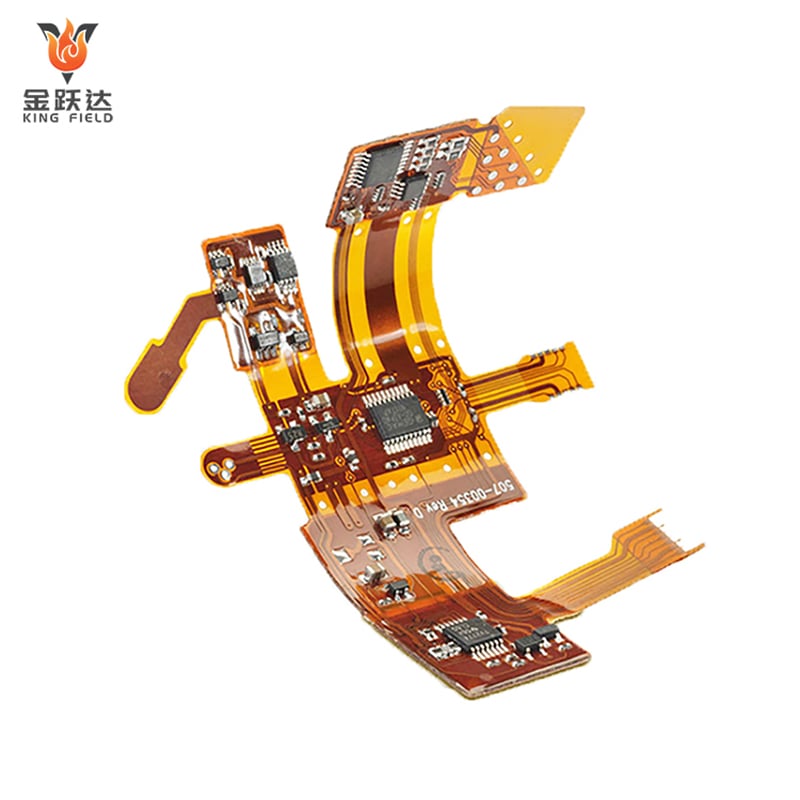
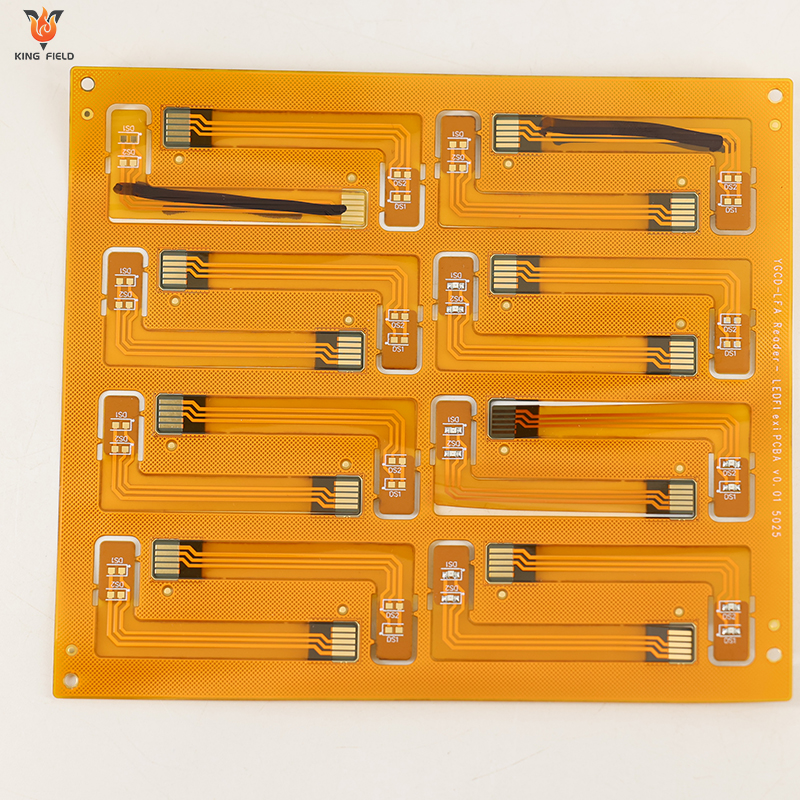
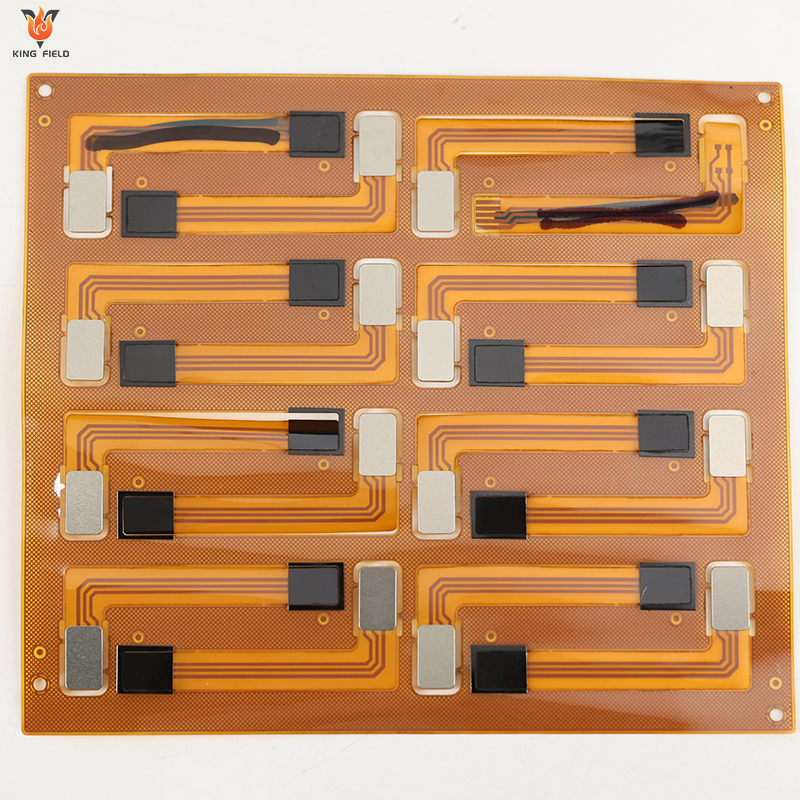
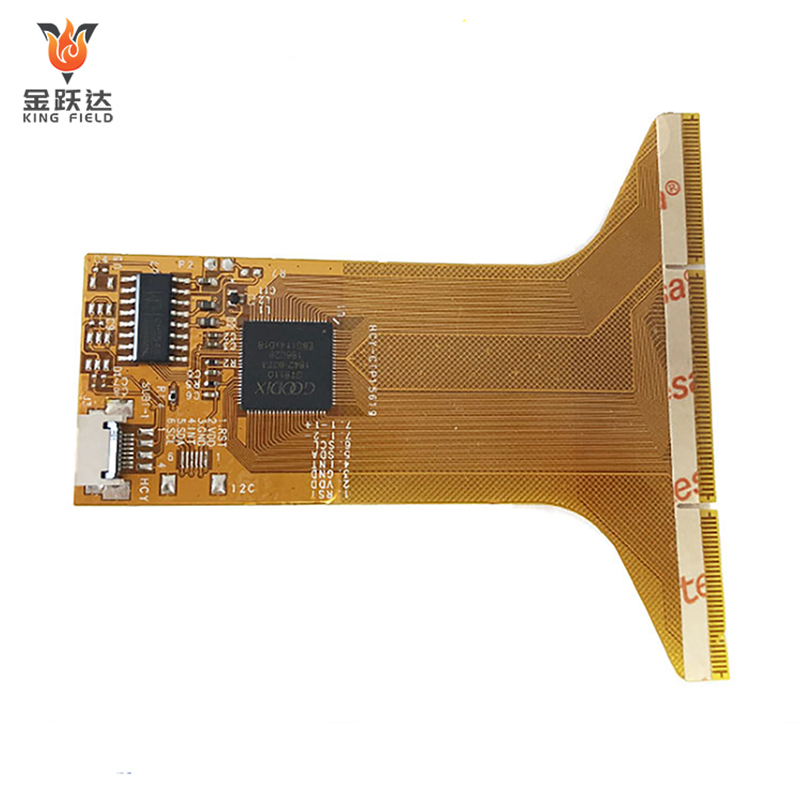
Flex PCB Assembly
As a PCBA manufacturer with over 20 years of professional experience, KING FIELD is committed to providing reliable one-stop Flex PCB Assembly solutions to customers worldwide.
☑ 20+ years of experience in flexible circuit board assembly
☑ SMT daily production capacity 60 million points
☑ SPI+3D AOI Dual Detection
Description
What is flexible PCB assembly?
Flexible printed circuit board (PCB) assembly simply means adding and soldering electronic parts on a flexible printed circuit board (PCB). Flexible PCBs are made of flexible substances such as polyimide or polyester and cannot be assembled in the same way as rigid circuit boards. The only way is first to attach them to a special carrier board and then proceed with component mounting, soldering, and testing.
KING FIELD's flexible printed circuit board assembly capabilities
Inspection: Implement dual inspection using SPI + 3D AOI
Minimum assembly component : 01005
Minimum BGA thickness: 0.3mm for rigid boards; 0.4mm for flexible boards;
Minimum precision lead size: 0.2mm
Component assembly accuracy: ±0.015mm
SMT capacity: 60,000,000 chips/day
Delivery time: 24 hours (express)
Order volume: The SMT factory supports medium to large-volume production.
KING FIELD 's advantages in flexible printed circuit board assembly
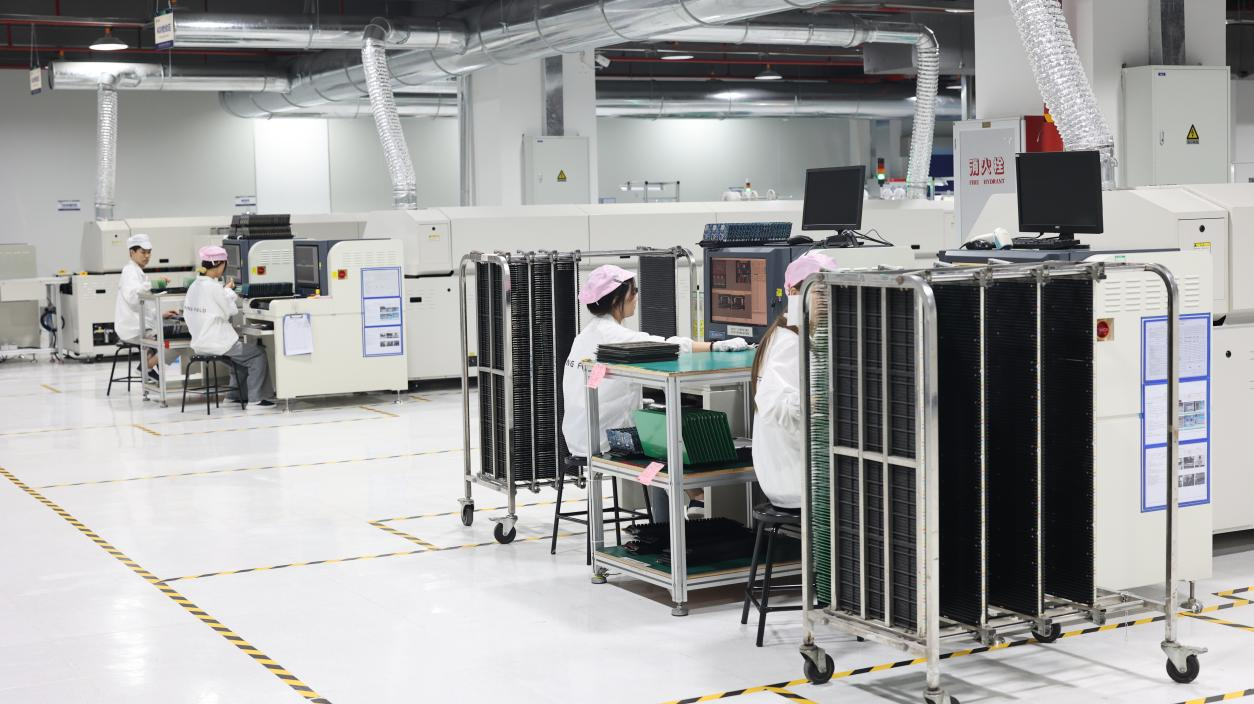
KING FIELD specializes in high-precision, high-reliability flexible printed circuit board assembly, possessing full-process service capabilities from design and manufacturing to assembly, and can fully meet the customized and high-standard needs of various industries.
20+ years of industry experience
- Founded in 2017, KING FIELD boasts a technical team with over 20 years of experience in printed circuit board design, possessing expertise in the complex structures and applications of flexible printed circuit boards.
- As a high-tech enterprise focusing on one-stop PCBA manufacturing, KING FIELD has always been committed to "creating an industry benchmark for ODM/OEM PCBA intelligent manufacturing" and has been steadily cultivating the high-end manufacturing field.
Factory rapid response
- The SMT factory supports medium to high-volume production and has strong capacity expansion capabilities , with a daily capacity of up to 60 million points.
- DIP can produce 1.5 million points daily and expedite orders can be delivered within 24 hours, thereby catering to customer's needs very efficiently.
- One-click import of Bill of Materials (BOM) and real-time quotation system significantly improves order processing efficiency.
Comprehensive testing and quality assurance
- KING FIELD is equipped with a flying probe tester, 7 automated optical inspection (AOI) units, X-ray inspection, functional testing and other complete testing systems to achieve full-process quality control.
- In terms of quality control, our company has passed six major system certifications: IATF 16949, ISO 13485, ISO 9001, ISO 14001, ISO 45001, and QC 080000. We use a digital MES system for full traceability to ensure that every PCBA is of consistent quality.
After-sales service
KING FIELD is committed to providing customers with a "1-year warranty + lifetime technical consultation" service that is rare in the industry. We guarantee that if a product has a quality issue without human factors, we will do a free return or exchange and also handle logistics costs.
- The average time for us to respond to a request from our after-sales team is no more than 2 hours.
- We have an average problem-solving rate of over 98%.

FAQ
Q1: Flexible boards are prone to deformation during SMT assembly , which can lead to inaccurate placement. What should be done?
KING FIELD: We use custom-designed high-temperature resistant composite materials to flatten and fix the flexible board in a predetermined curvature state . By combining a segmented low-temperature reflow soldering profile, we make sure that the flexible board stays flat and stable all the way through the mounting process.
Q2:How to solve the problem of cracking at the rigid-flexible joint after assembly ?
KING FIELD: We design a stepped window structure in the rigid-flexible joint area and use a special flexible covering film as a buffer layer , combined with flow control adhesive for local reinforcement . This can effectively disperse stress and withstand repeated bending.
Q3: Tiny solder joints on flexible boards are prone to bridging after welding. How can this be controlled?
KING FIELD: We use ultra-fine solder paste , laser -cut steel mesh, and nitrogen-protected welding, combined with high-precision SPI + AOI dual detection. This allows us to precisely control the formation of each micro-solder joint.
Q4: How to extend the life of solder joints in ribbon cables that require repeated bending?
KING FIELD: We use a strain relief design in the bending area and apply a flexible underfill adhesive to the key solder joints . This makes it easy for the solder joints to bend along with the flexible substrate but also prevents fatigue.
Q5: How do you handle misalignment and unstable impedance in multilayer flexible boards?
KING FIELD: We pre-shrink each batch of material to stabilize the dimensions, and then collect deformation data of each layer of material in real time for deformation correction.