
 EN
EN
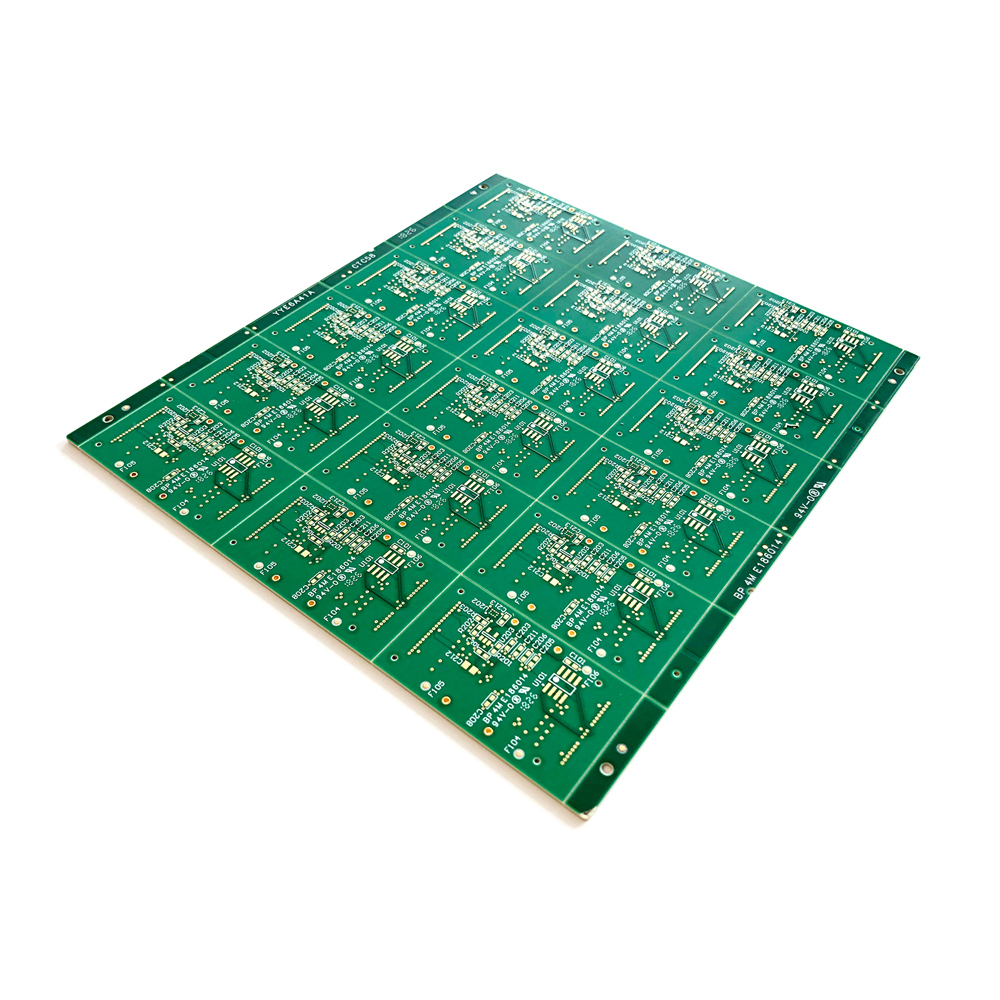
Exceptional Thermal Stability: How Rigid Polyimide PCB Withstands Extreme Heat
Rigid polyimide PCB delivers unrivaled thermal stability, sustaining continuous operation at 260°C without delamination, warping, or electrical degradation. Its aromatic imide backbone provides a glass transition temperature (Tg) above 360°C and an ultra-low coefficient of thermal expansion (CTE) below 20 ppm/°C—key metrics defined in IPC-4101 for high-performance laminates. This molecular structure prevents dimensional shifts and material breakdown even under repeated thermal cycling. Unlike standard laminates that soften or crack at high heat, rigid polyimide maintains mechanical integrity and stable electrical performance throughout its lifespan. For short-term excursions, it tolerates temperatures up to 400°C, making it indispensable where heat-induced failure is unacceptable. This resilience stems from strong covalent bonds within the imide rings, which resist chain scission and preserve dielectric constant stability across extreme temperature ranges.
Rigid Polyimide PCB vs. FR-4: Critical Differences in High-Temperature Reliability
Real-World Failure Thresholds: FR-4 Degrades at 130°C vs. Rigid Polyimide PCB’s 260°C Continuous & 400°C Short-Term Tolerance
Standard FR-4 PCBs experience thermal degradation above 130°C—evidenced by blistering, delamination, and insulation resistance loss—rendering them unsuitable for aerospace avionics or downhole power electronics. In contrast, rigid polyimide PCBs operate reliably at 260°C continuously, thanks to their aromatic imide backbone and superior thermal decomposition resistance. During thermal shock events—such as sensor operation near jet engines—they withstand spikes to 400°C for up to 10 minutes without delamination or electrical drift. Accelerated aging simulations confirm this gap: FR-4 exhibits 92% failure rates at 150°C, while rigid polyimide sustains 78% survival under 260°C stress testing. FR-4’s moisture-sensitive epoxy resin further compromises insulation resistance at elevated temperatures—a vulnerability eliminated by polyimide’s inherent hydrophobicity. Applications like geothermal monitoring systems and ceramic kiln controllers depend on this proven ceiling to meet safety and performance standards.
Proven Performance in Mission-Critical High-Temperature Industries
Rigid polyimide printed circuit boards (PCBs) deliver verified reliability where thermal extremes threaten conventional electronics. Their unmatched heat resistance enables deployment in sectors demanding zero-failure tolerance—validated through real-world use across aerospace, biotechnology, and defense.
Aerospace: NASA JPL Mars Rover Motor Controllers and Hypersonic Avionics
In aerospace applications, rigid polyimide PCBs withstand conditions that incapacitate alternatives. NASA JPL integrated them into Mars rover motor controllers enduring temperature cycling between –70°C and +195°C—conditions that induce resin degradation in FR-4 and other common substrates during Martian dust storms. Hypersonic flight systems leverage their 260°C+ sustained operation capability to prevent signal drift in radar altimeters and telemetry electronics. Performance stability remains provable after exposure to rocket exhaust thermal shocks exceeding 600°C during atmospheric re-entry testing.
Medical & Military: Sterilizable Surgical Electronics and Ruggedized Electronic Warfare Systems
Medical single-use instruments require repeated steam sterilization at 135°C–270°C under 15–30 PSI pressure without delamination. FR-4 boards suffer resin decomposition after just 5–10 cycles, introducing ionic contamination risks. Rigid polyimide laminates survive over 200 sterilization events while maintaining impedance consistency in dynamic pressure sensors and vitals monitors. Defense applications exploit their low CTE (<20 ppm/°C) to stabilize electromagnetic warfare systems subjected to thermal cycling during desert deployment. Field artillery communication modules from leading manufacturers rely on rigid polyimide PCBs to resist jamming failures caused by thermal-induced board warping.
Design and Manufacturing Considerations for Rigid Polyimide PCB Implementation
Transitioning to rigid polyimide PCB requires careful evaluation of fabrication processes and design rules. Its high glass transition temperature (Tg > 360°C) demands higher lamination pressures and extended curing cycles compared to FR-4. Drilling and routing generate more heat and tool wear, so carbide bits with specialized geometries are recommended to prevent burring and delamination. Layer stack-up symmetry is critical: rigid polyimide’s ultra-low CTE (<20 ppm/°C) must be matched with copper foil expansion to avoid internal stress during thermal cycling. Designers should also account for reduced dimensional shift during etching—polyimide absorbs less moisture and shrinks less than FR-4—but tight tolerances (±0.1 mm) remain achievable with proper panel management. Conformal coating enhances protection against moisture and vibration in harsh environments, provided the coating is compatible with polyimide’s surface energy. Though fabrication costs run two to three times higher than FR-4, the long-term reliability gain eliminates field failures and reduces total cost of ownership.
FAQ
What is the maximum continuous operating temperature for rigid polyimide PCBs?
Rigid polyimide PCBs can continuously operate at temperatures up to 260°C and tolerate short-term spikes of up to 400°C.
How does rigid polyimide PCB compare to FR-4 in high-temperature environments?
Rigid polyimide PCB significantly outperforms FR-4, which degrades at 130°C. Polyimide can maintain stability at much higher temperatures without delamination or electrical drift.
What industries benefit most from rigid polyimide PCBs?
Major beneficiaries include aerospace, medical, military, and downhole electronics industries where high heat durability and reliability are essential.
What should designers consider when transitioning to rigid polyimide PCBs?
Fabrication requires higher lamination pressures, extended curing cycles, specialized carbide bits for drilling, and careful layer stack-up symmetry to manage thermal stress.
Table of Contents
- Exceptional Thermal Stability: How Rigid Polyimide PCB Withstands Extreme Heat
- Rigid Polyimide PCB vs. FR-4: Critical Differences in High-Temperature Reliability
- Proven Performance in Mission-Critical High-Temperature Industries
- Design and Manufacturing Considerations for Rigid Polyimide PCB Implementation